
GEO Agency
AI Search Optimization Agency
HITOX Helping Brands Get Chosen by AI
Taxgoddess
Kintsugi
CreativeCopywriter
Sheerwater Pond Supply
BHOD LUXE INC
The RedHead Solutions
Fimax
Early 2000s — The SEO Era
Missed the SEO land grab?
Early movers locked in rankings and years of compounding organic growth.
2010s — The Social Era
Missed organic social?
Early adopters built audiences before feeds got crowded and attention got expensive.
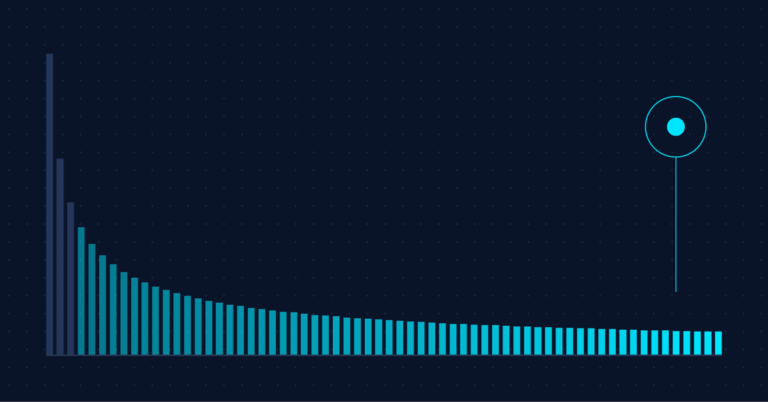
Happening Now — The AI Search Era
Don’t miss
AI Search.
AI-search traffic grew +527% year over year — customers now get answers from ChatGPT, Gemini and Perplexity.
What we’ve achieved for clients
Real revenue, from organic — not vanity metrics.
$2.92M
in revenue from organic search — on a $7,000 annual spend.
A 417x return: data-led content targeting commercial-intent queries, compounding for three years without paid support.
267%
organic traffic growth for TaxGoddess.
600 → 25k
monthly organic sessions for Kintsugi.
Why choose HITOX
Why brands pick us over another AI seo agency.
01
Measurement before promises
Every engagement starts with a tracked share-of-answer baseline across your category’s real buying prompts. If the math doesn’t work, we say so before you spend.
02
Revenue, not mentions
We report pipeline and revenue — like $2.92M from a $7k organic spend — not impressions. Visibility is only worth what the buyer behind it pays.
03
Transparent methodology
We show you exactly which prompts we track, how we measure share of answer, and what changed — you can verify the work, not just the report.
04
Senior strategists only
The strategist in your kickoff is the strategist doing the work — no account-manager relay, no bait-and-switch staffing.
05
All four surfaces, one program
GEO, SEO, AEO, and Reddit share one roadmap and one measurement system — no channel silos fighting over credit.
06
No lock-in
Month-to-month after the first quarter — clients stay because it works, not because a contract says so.
Three disciplines. One goal: get chosen by the engine.
01
Generative & Answer Engine Optimization
LLM citations, AI Overview presence, featured snippets, and voice answers — one program.
02
Search Engine Optimization
Modern, data-led organic search strategies that still carry the pipeline.
GEO by vertical
Generative engine optimization, tuned to your industry.
SaaS
GEO for SaaS & B2B tech
When a buyer asks ChatGPT for “the best CRM for a 50-person team,” the model answers from what it has read and can cite. We make your product the entity models trust — through comparison-grade content, structured data, and third-party corroboration.
Category & alternative-page architecture LLMs can parse
Review-site and analyst corroboration campaigns
Prompt-space tracking across 40+ buying queries
Free
AI visibility check — see which brands ChatGPT, Gemini and Perplexity recommend in SaaS today.
E-Commerce
GEO for product discovery
AI shopping answers compress a 40-result SERP into three recommendations. We engineer product data, comparison content, and UGC signals so your catalog survives the compression — and gets recommended by name.
Product schema & feed optimization for AI indexing
Best-of and comparison content built to be quoted
Marketplace & review-signal reinforcement
Free
AI visibility check — see which brands ChatGPT, Gemini and Perplexity recommend in e-commerce today.
Healthcare
GEO for health & medical
Health answers are the highest-scrutiny surface in AI search. We build medically-reviewed, citation-dense content that models treat as a safe source — and that compliance teams can sign off on.
Clinician-reviewed content pipelines with audit trails
E-E-A-T entity building for medical authors
YMYL-safe structured data & sourcing standards
Free
AI visibility check — see which brands ChatGPT, Gemini and Perplexity recommend in healthcare today.
Real Estate
GEO for property & local
Property search is going conversational — “best neighborhoods in Austin for young families” is an LLM query now. We build hyper-local data assets that make your brokerage the source models quote.
Neighborhood-level data content at programmatic scale
Local entity & map-pack reinforcement
Lead-capture placement inside answer-bait assets
Free
AI visibility check — see which brands ChatGPT, Gemini and Perplexity recommend in real estate today.
Fresh from the lab
Frequently asked questions
General Info
What is Generative Engine Optimization (GEO)?
Generative Engine Optimization (GEO) is the practice of optimizing your brand’s content and digital presence so AI platforms like ChatGPT, Perplexity, Gemini, and Google AI Overviews cite, mention, or recommend you in their generated answers. Unlike traditional SEO, which competes for rankings, GEO competes to be part of the answer itself.
Why do AI engines cite Reddit, review sites, and forums so often — and how does that help me?
LLMs treat candid community discussion as high-trust evidence, which is why Reddit is now among the most-cited domains in ChatGPT and Perplexity. HITOX builds ethical presence in the communities where your buyers already talk — genuine participation, not spam — so AI engines encounter your brand in the sources they trust most.
What is Answer Engine Optimization (AEO)?
Answer Engine Optimization (AEO) is the practice of structuring content so AI systems can extract it as a direct answer — question-based headings, concise 40–60 word responses, FAQ schema, and clear factual claims. AEO makes your content quotable; GEO makes your brand recommendable. Most businesses need both, which is why HITOX delivers them as one program.
Is GEO a legitimate strategy or just marketing hype?
GEO is real, with real caveats. Roughly a third of US consumers now use generative AI search, 94% of B2B buyers use AI tools during purchase research, and Princeton’s original GEO study showed optimization can boost AI visibility by up to 40%. The hype problem is vendors overpromising — legitimate GEO increases your probability of being cited; it cannot control AI outputs.
Why are businesses investing in GEO right now?
Because buyer behavior already shifted. A majority of Google searches now end without a click, and AI answers increasingly decide which brands get discovered and trusted before a website visit ever happens. Brands that build citation authority early define their category’s AI answers; brands that wait inherit whatever the engines learned from competitors.
What is LLM optimization — is it different from GEO?
LLM optimization (LLMO) is another name for GEO: optimizing how large language models read, interpret, and reference your brand. GEO, AEO, LLMO, AIO, and AI SEO are used interchangeably across the industry — no standardized definitions exist yet. What matters is the strategy behind the acronym: structured content, entity consistency, and third-party corroboration.
Which industries benefit most from GEO?
SaaS, ecommerce, professional services, healthcare, finance, and B2B tech — any category where buyers research heavily before purchasing. AI-referred visitors arrive later in the buying journey and convert at higher rates, so even modest AI visibility produces disproportionate pipeline value.
Is it too early for small and mid-sized businesses to invest in GEO?
It’s early — which is the advantage. AI answers in most SMB categories are still weakly contested, so consistent fundamentals (structured site, review depth, community mentions) can win citations that will cost far more once competitors wake up. The right-sized approach is folding GEO into your existing search investment, not buying it as an expensive separate service.
GEO vs SEO
Is GEO replacing SEO?
No. SEO is the foundation GEO stands on — AI engines pull heavily from content that already ranks and from sources with established authority. Google’s own 2026 documentation states that optimizing for its generative AI features is still SEO. What changed is the goal: rankings alone no longer guarantee visibility inside AI-generated answers.
Is GEO just SEO with a new name?
No — but they overlap. Strong SEO gets AI crawlers to your content; GEO determines whether they cite you. The real differences: LLMs weigh third-party mentions (Reddit, review sites, publications) heavily, measurement means sampling AI responses instead of tracking rankings, and answer-first structure matters far more. Agencies that simply relabeled their SEO retainer “GEO” skip all of this.
What’s the difference between SEO, AEO, and GEO?
SEO ranks your pages in traditional search results. AEO structures your content so AI systems extract it as the direct answer. GEO builds the authority signals — citations, brand mentions, third-party corroboration — that make AI engines trust and recommend your brand. They compound rather than compete, which is why HITOX builds all three as one integrated strategy.
Do I need a separate GEO strategy if I already have an SEO team?
You need an expanded workflow, not a separate silo. Your SEO fundamentals still apply, but GEO adds prompt research (how buyers phrase questions to AI), citation-source analysis, third-party mention building, and AI response sampling for measurement. HITOX integrates these into one modern search program rather than billing GEO as a bolt-on.
Google says GEO is “just SEO” — is that true?
True for Google only. Google’s documentation accurately says nothing special is needed for its own generative features beyond solid SEO. But ChatGPT, Perplexity, and Claude retrieve and weigh sources differently — licensing deals, community content, and entity consistency matter in ways Google’s guidance doesn’t cover. Optimizing for one engine isn’t optimizing for all of them.
How is GEO measured differently from SEO?
SEO measures rankings and clicks. GEO measures share of model: the percentage of AI answers, across a defined set of buyer-intent prompts, where your brand is mentioned or cited versus competitors. Because AI responses vary run to run, measurement requires repeated sampling — there’s no fixed “position 3” in a ChatGPT answer. You’re cited or you’re invisible.
AI Search Optimization
How do AI engines decide which brands to cite?
AI engines triangulate trust: content that already ranks, consistent facts about your brand across many sources, structured data they can parse, statistics and expert quotes worth citing, and — heavily — third-party corroboration from communities, review platforms, and publications. A brand mentioned credibly in ten independent places beats a brand with one perfect website.
How do I make my website readable and citable for AI?
Make every important fact extractable: question-based headings with direct answers beneath them, comparison tables, valid JSON-LD schema (FAQ, Product, Organization), AI crawlers allowed in robots.txt, and your prices, specs, and differentiators in HTML — never buried in PDFs, images, or JavaScript. AI systems cite what they can parse cleanly and verify elsewhere.
Should I optimize for ChatGPT, Perplexity, Gemini, or Google AI Overviews first?
Start where your buyers are. Google AI Overviews has the widest reach; ChatGPT dominates conversational research; Perplexity over-indexes on research-heavy B2B buyers. Each engine weighs sources differently — ChatGPT favors structure and licensed sources like Reddit, while AI Overviews favors fresh community content. Prompt research identifies which engines your buyers use, then prioritizes.
Do Reddit, Quora, and review sites really affect AI visibility?
Yes — significantly. Reddit became one of ChatGPT’s most-cited domains through licensing deals, and AI engines pull from Quora, G2, Trustpilot, and niche forums as trust evidence. Notably, cited threads don’t need virality: most cited Reddit posts have fewer than 20 upvotes. Focused, genuine presence in the right conversations beats chasing engagement numbers.
What is llms.txt and do I need it?
llms.txt is a proposed file describing your site to AI systems. Honest answer: evidence that major LLMs read it is weak, and practitioners are split. Our position — auto-generate and maintain one (it costs nothing and may help AI agents later), but never pay for it as a service. Put critical facts in your HTML, where AI crawlers actually look.
What AI search tactics should I avoid?
Avoid anything that games rather than earns: fake Reddit and forum seeding (platforms and engines increasingly detect it), keyword stuffing “for AI,” buying guaranteed-citation services, and hiding facts in companion files instead of your pages. These tactics decay fast and can damage brand trust. What compounds: original data, real reviews, consistent entity facts, earned mentions.
How long does it take to appear in AI-generated answers?
Expect meaningful movement in 3–6 months. Early wins — schema, content restructuring, entity fixes — can surface within weeks, but citation authority builds like search authority: through consistent third-party mentions and content AI engines learn to trust. Anyone promising AI visibility in days is selling a hack that won’t hold.
Working with HITOX
What does HITOX actually deliver each month?
Concrete deliverables: AI visibility reports (your share of answers across ChatGPT, Perplexity, Gemini, and AI Overviews versus competitors), content engineered for extraction, schema implementation, entity and citation-source work, earned third-party mentions, and a prioritized gap analysis. Reporting shows AI citations alongside rankings — never Google rankings relabeled as “AI results.”
Can HITOX guarantee my brand appears in ChatGPT or AI Overviews?
No — and any agency guaranteeing AI citations is lying to you. AI responses are probabilistic; the same prompt returns different answers on different runs. What we do is systematically increase your citation probability and prove it: tracked share of AI answers across a defined buyer-intent prompt set, reported transparently every month.
How much do HITOX’s GEO and AI SEO services cost?
Agency GEO services across the market run roughly $1,500–$25,000+ per month depending on competitiveness and scope. HITOX offers transparent, tiered engagements built for SMB and mid-market brands — every proposal breaks the investment into technical work, content, authority building, and AI visibility tracking, so you can compare offers on equal terms.
How does HITOX measure and report ROI?
Four layers: AI visibility (share of answers for your prompt set versus competitors), traffic (AI-referred sessions and branded search lift), pipeline (inquiries and conversions attributed to AI-assisted discovery), and quality (sentiment and accuracy of how AI describes your brand). Executive reporting ties citation share to qualified pipeline — not vanity mentions.
Which markets does HITOX serve?
HITOX serves SMB and mid-market clients across the USA, UK, Canada, and Australia, with senior-level delivery from India. AI engines are global, so GEO work travels well — what localizes is prompt research in your market’s phrasing and citations from the sources your regional buyers trust.
What results has HITOX achieved for clients?
Representative outcomes: 267% organic traffic growth for TaxGoddess, supporting revenue scale to roughly $2.92M ARR, and growth from 600 to 25,000 monthly organic sessions for Kintsugi. Every engagement is tracked against agreed KPIs — visibility share, qualified traffic, and pipeline — with full access to the underlying data.
How do I know HITOX isn’t just rebranding SEO as GEO?
Ask us the questions you’d ask any GEO agency — we publish the answers. We show real client citation data with the prompt sets behind it, explain our methodology without vague “AI magic” claims, and state plainly that we influence AI answers but cannot control them. If an agency fails that transparency test, keep looking.
How do we get started?
Start with a free AI visibility check: we run your brand and top competitors through buyer-intent prompts across ChatGPT, Perplexity, Gemini, and AI Overviews, then show you where you’re cited, where competitors own the answers, and the highest-leverage gaps. From there we scope a program matched to your market and budget.